


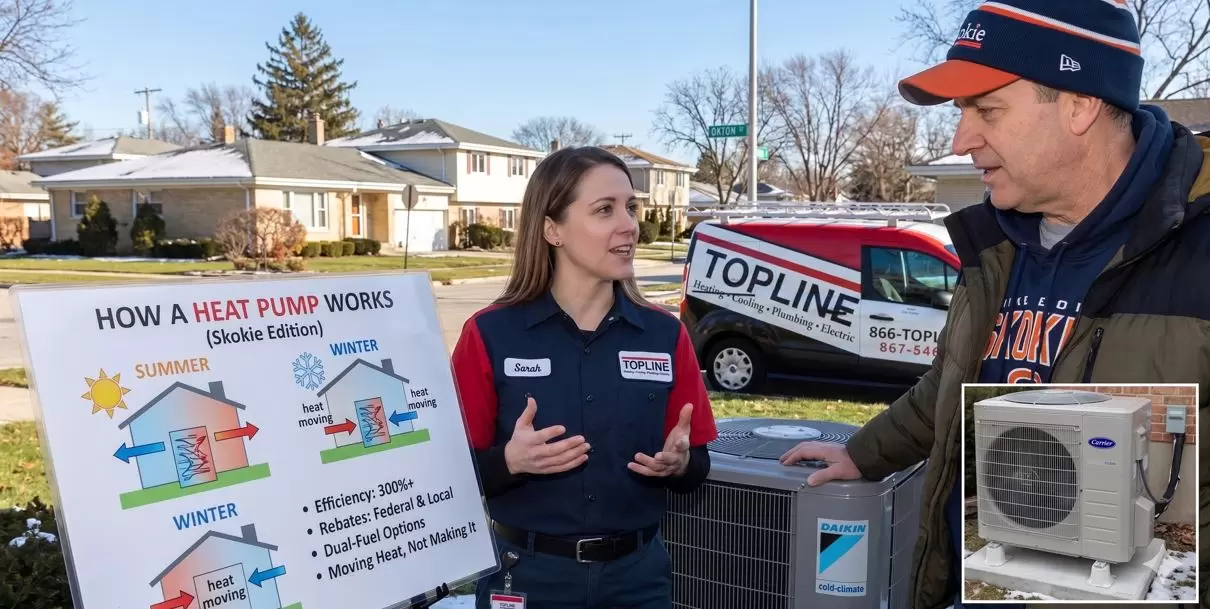
What Is a Heat Pump and How Does It Work?
A heat pump is an all-in-one comfort system that heats and cools your home by moving heat rather than generating it, making it one of the most energy-efficient options available today.
Using the same core technology as an air conditioner, a heat pump absorbs heat from inside your home and transfers it outdoors to keep you cool in warmer months. When temperatures drop, it reverses the process, pulling heat from the outside air, even in cold conditions like Chicago, and bringing it indoors to warm your space.
What’s Different About a Heat Pump?
Unlike traditional systems that rely on a separate gas furnace for heating and an AC unit for cooling, a heat pump does both jobs with a single, streamlined system.
This not only simplifies your setup but also gives you more control over energy use. Many modern heat pumps run entirely on electricity, while hybrid (dual-fuel) systems can pair with a gas furnace, allowing homeowners to switch between energy sources based on local utility rates and maximize cost efficiency year-round.
How Heat Pumps Perform During Chicago Cold Snaps
The most common question Skokie area homeowners ask Topline Heating & Cooling is: Can a heat pump really handle a Chicago winter?
The short answer is yes.
Ten years ago, heat pumps struggled when the temperature dropped below freezing. Today, cold-climate air-source heat pumps (ccASHPs) are engineered with inverter-driven compressors that can extract heat from the outside air even when it’s -15°F or colder.
And they can also provide cooling in the summer!
How a Heat Pump Replaces Your Current Setup
| Feature | Traditional Gas Furnace + AC | Cold-Climate Heat Pump |
| System Type | Two separate units (Burner + Condenser) | One system for both heating and cooling |
| Energy Source | Natural Gas & Electricity | 100% Electricity |
| Efficiency | 80%–98% (AFUE) | 200%–400% (COP) |
| Winter Performance | Strong, hot air (120°F+) | Steady, warm air (90°F–105°F) |
| Environmental Impact | High (On-site combustion) | Low (Zero emissions on-site) |
The Top 4 Questions Chicago Area Homeowners Are Asking
1. Will my electric bill skyrocket in January?
In the Chicago area, electricity can be more expensive than natural gas per BTU. However, because a heat pump moves heat rather than creating it, it is incredibly efficient. To avoid sticker shock, many Skokie residents opt for a Dual-Fuel (Hybrid) System.
-
Use the heat pump for 90% of the year (including most of the winter). When the temperature drops below a switchover point (usually 15°F–20°F), your existing gas furnace kicks in to handle the extreme load.
2. What incentives can I get right now (2026)?
Living in Skokie makes you eligible for several layers of savings:
-
Federal Tax Credit (25C): Under the Inflation Reduction Act, you can claim 30% of the cost, up to $2,000 annually, for a heat pump.
-
ComEd Rebates: ComEd offers instant rebates ranging from $1,000 to $2,000 for qualified high-efficiency heat pumps.
-
Illinois State Rebates: Depending on your household income, the “HEAR” (Home Electrification and Appliance Rebates) program can provide up to $8,000 off at the point of sale.
3. Does the ‘Lake Effect’ impact performance?
Skokie’s humidity and heavy snow can cause ice buildup on the outdoor coils. Modern units have an automatic defrost cycle to melt this ice. To ensure it works perfectly:
-
Mount it high: Ensure your installer places the unit on a snow stand at least 12–18 inches off the ground to prevent it from being buried.
-
Clear the perimeter: Keep a 2-foot breathable space around the unit after a heavy Skokie snowfall.
4. How is the air different from a furnace?
A gas furnace is all or nothing. It blasts hot air and then shuts off.
A heat pump provides a steady stream of warm air. It feels more like a gentle, consistent warmth rather than a hot breeze. This eliminates the cold spots often found in older Skokie homes.
The Pros and Cons for the North Shore
The Pros of Heat Pumps:
-
Dehumidification: They are significantly better at removing Chicago’s summer mugginess than old-school AC units.
-
Safety: No combustion means zero risk of carbon monoxide leaks from the unit.
-
Zoning: Perfect for 2-story homes where the upstairs is always too hot and the downstairs is always too cold.
The Cons:
-
Upfront Cost: Higher initial investment than a standard AC replacement (though rebates close this gap).
-
Installation Quality: A heat pump’s efficiency depends entirely on a Manual J Load Calculation. If your HVAC contractor doesn’t measure your windows and insulation, the system won’t perform.
Is it right for your Skokie home?
If you have a home with decent insulation and you are already looking to replace an aging AC unit, the heat pump is the smartest financial and comfort move you can make. By pairing it with your furnace in a hybrid setup, you get the efficiency of the future with the safety net of gas for those rare -20°F nights.
Ready to Upgrade?
Contact the local HVAC pros at Topline Heating & Cooling by calling (866) 867-5463 who specialize in Cold Climate certification to ensure you’re getting a system built for Illinois, or contact us online with any questions about heat pumps.